Orthodontic Clear Aligners in Medically Complex Patients: A Breif Case Report on Renal Dialysis

Image
  Orthodontic Clear Aligners in Medically Complex Patients: A Breif Case Report on Renal Dialysis Managing orthodontic patients with renal failure on hemodialysis requires a careful balance of clinical precision and patient safety. These cases demand modifications at every level—from material selection to treatment mechanics. I recently managed a case using Maxflex™ trilayer clear aligners, and I'd like to share the key protocols that guided a safe approach. The Medical Problems: Altered bone metabolism Increased bleeding risk (due to heparin during dialysis) Higher susceptibility to plaque accumulation and infection Potential toxicity concerns from aligner sheet materials 📋 My Modified Protocol: Timing: Procedures were scheduled on non-dialysis days to minimize bleeding risk. While this was not always fully, due to the patient's fluctuating health status, I adapted accordingly. Plaque Control & Attachments: Based on clinical research and expert opinion, attachments were e...
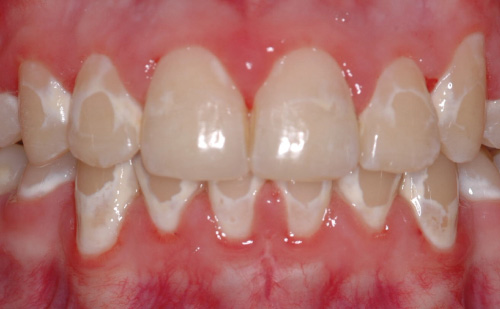
Decalcification And Caries Associated With Orthodontic Treatment


if you are intersted in this article please follow for more readings

https://myorthodonticsblogg.blogspot.com/   👈🏻


Enamel demineralization is a common negative consequence of orthodontic treatment in the absence of appropriate oral hygiene maintenance.


It is the loss of calcified tooth substance due to the attack by acidic-by-products of plaque metabolism.


An early recognition is sentient to prevent permanent damage. Occurrences during active treatment necessitate a shortened treatment plan or in severe cases; early termination of treatment.

The increase in food stagnation and increase in the retentive sites of bacteria lead to a change in the microflora (low Ph environment).

Decalcification may occur within one month due to : Prolonged accumulation of plaque next to the bracket .

White Spot Lesions caused by the decalcification process can be distinguished from the developmental hypocalcified lesions on the basis of location, shape, and dimensional stability with time.

Good predictors for the development of white spot lesions in a patient:
- Poor oral hygiene,
- sugar rich food,
- long treatment time,

- Interproximal caries.

The incidence of enamel demineralization is high in the maxillary and mandibular canines and premolars .


The maxillary laterals had the highest incidence rate, almost three times as frequent as that found for the centrals. One in every two individuals wearing fixed orthodontic appliances develops a nondevelopmental enamel opacity .


Comments

Popular posts from this blog

Gable Bend in Orthodontic Aligners: Concept and Application

🚨Precision Cuts vs. Buttons: Making the Right Choice in Aligner Therapy🚨

The Concept of the Straight Wire Appliance in Orthodontics